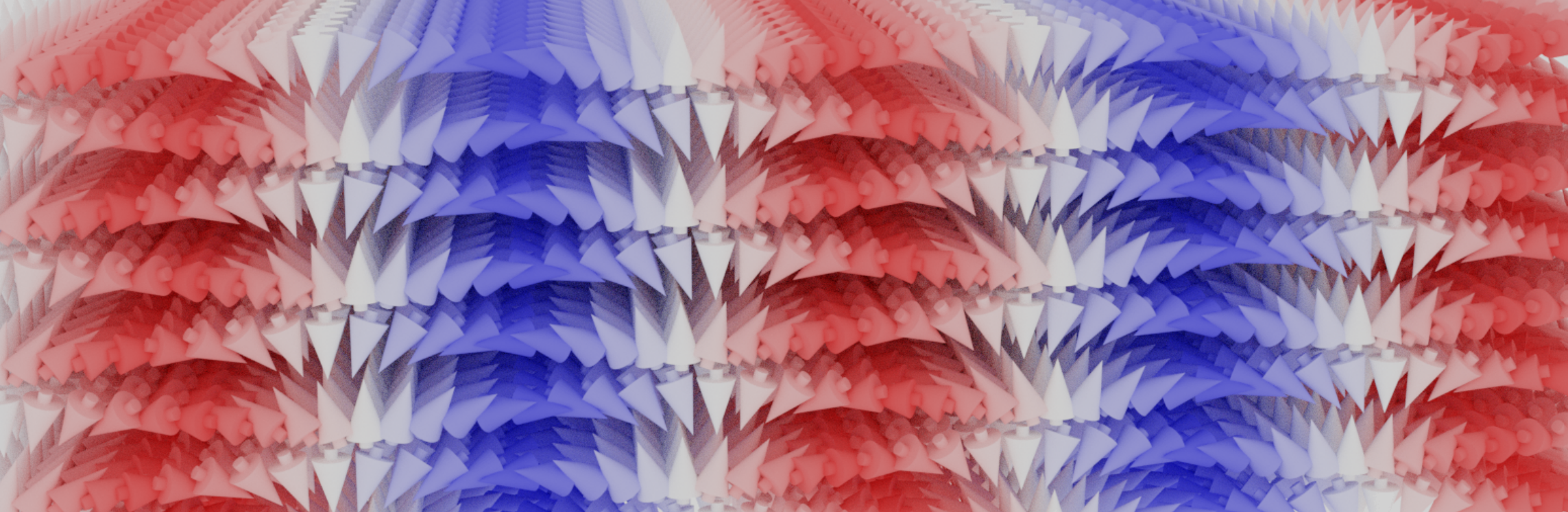
Complex materials for everyday energy challenges
Predictions state that by 2040, computational energy demand of current technologies will exceed global energy production. With the growth of transistor density also slowing and approaching its physical limits, as well as projections that silicon devices will become unfeasible as a storage medium within two decades, it is an important challenge in materials science to discover new materials systems that can be used for an alternative computational paradigm.

Ordered polar topologies for emergent electronic behavior

Atomically engineered heterostructures to design device functionality
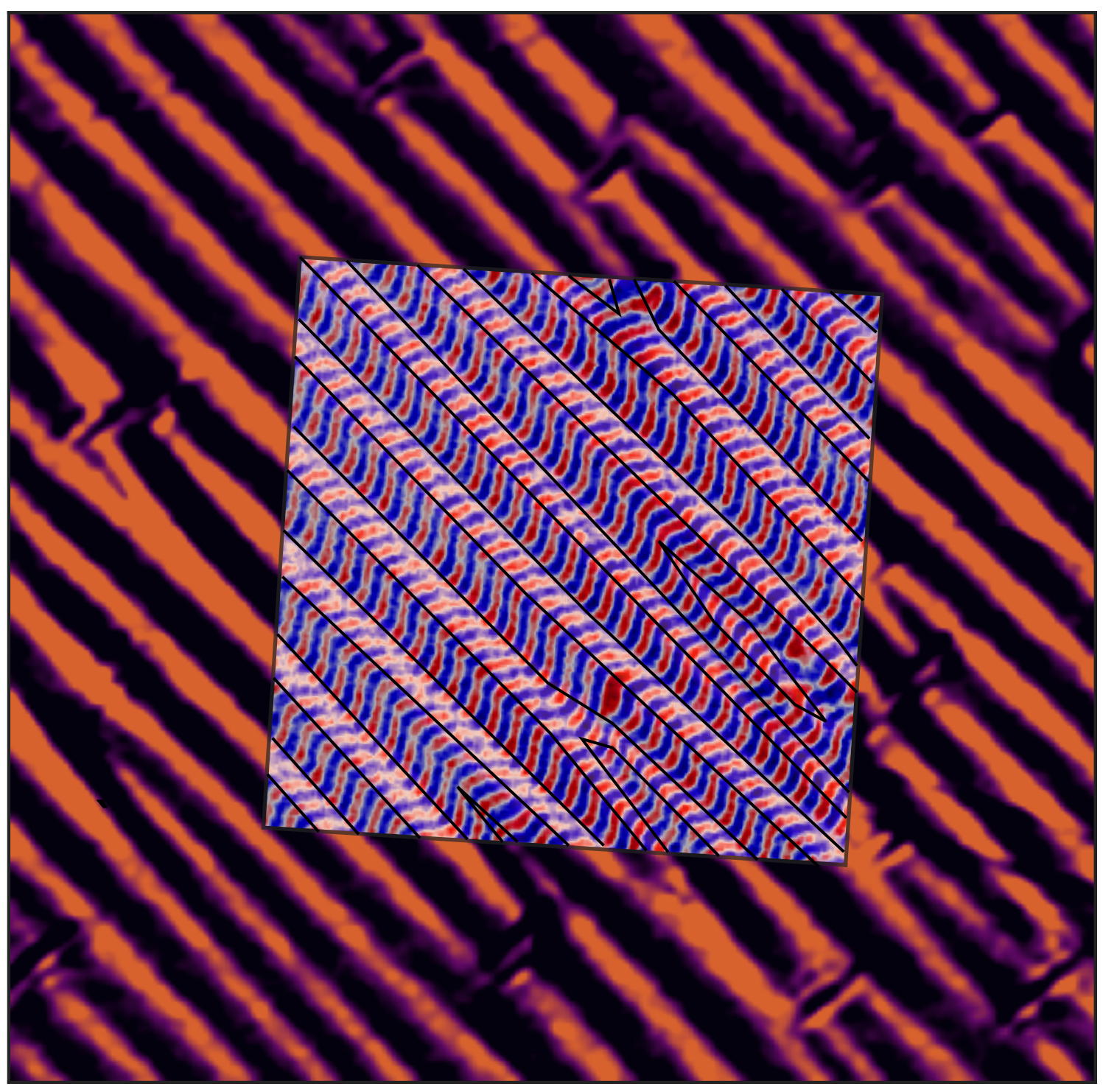
Designer multiferroic textures for electrically controlled spintronics
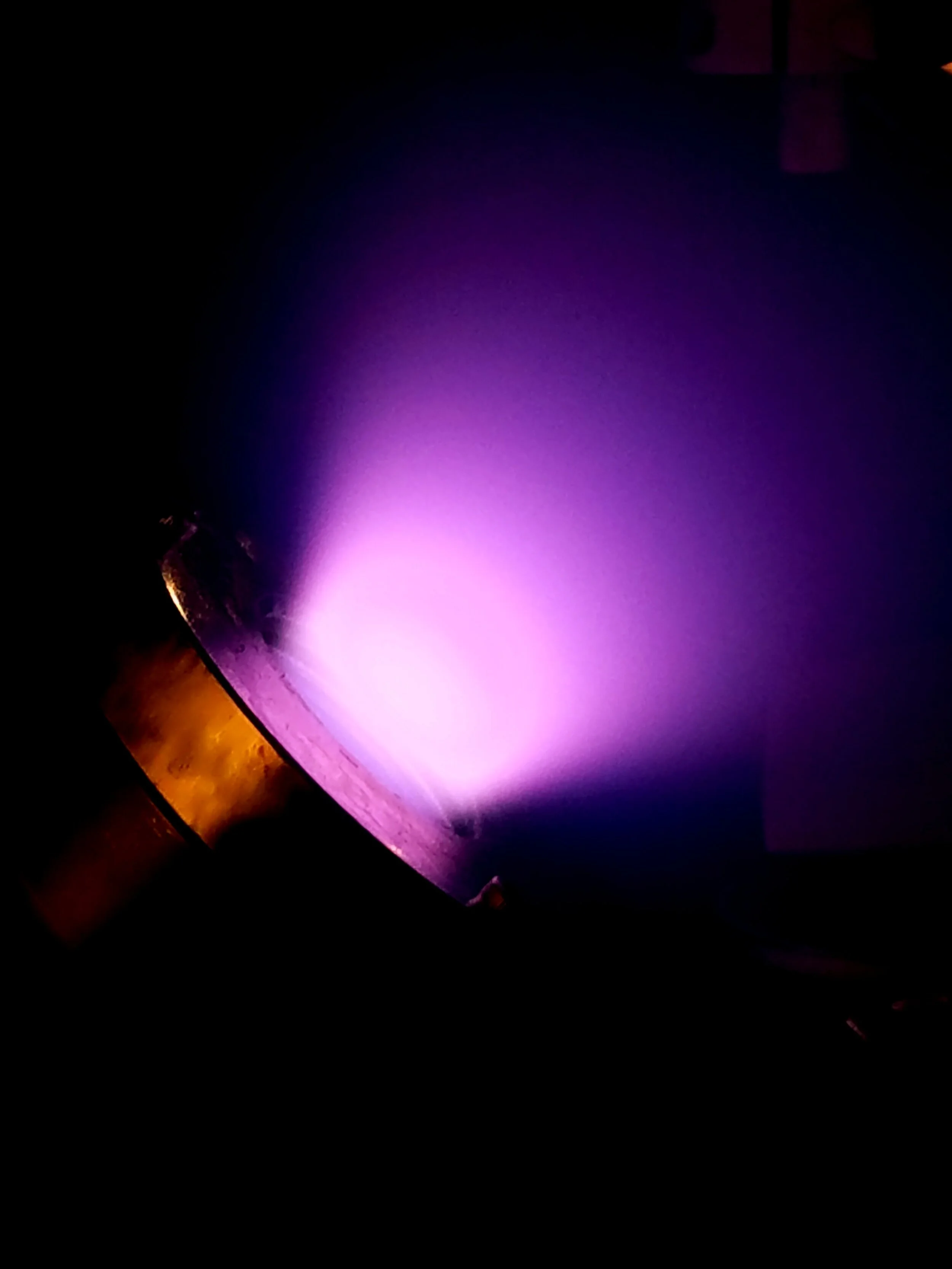
Scalable deposition techniques and AI-assisted development.
My research centers around the discovery and engineering of functionalities in complex magnetic, electronic, and quantum oxides. Precisely engineering the boundary conditions of nanoscale crystals can stabilize interesting properties and topologies, which we can then image with modern real- and reciprocal space techniques. I am particularly interested in systems with nontrivial functional orders, such as structural disorder, noncolinear magnetism, and complex ferroic domains. My goal is to combine materials design, atomically precise synthesis, and state-of-the art metrology techniques to create materials and devices for understanding fundamental physics and applications in computation. By mixing AI-driven metrology and process optimization with our own expertise, we can further accelerate the transition of quantum materials from discovery in the lab to a producible and useful scale.